


新着情報News
- 2026年10月21日勉強会
NEW
- QUDH勉強会(2026/11/18)
- 2026年10月01日
- QUDH勉強会(2026/10/21)
- 2026年10月01日
- QUDH勉強会(2026/10/1)
- 2026年09月09日
- 令和9年度 九州大学大学院人文情報連係学府修士課程(人文学重視型・第1期募集)選抜試験合格者
- 2026年08月25日
- 【2026年11月30日(月)17時締切厳守】2027年3月修了予定者の修士論文題目届の提出について
- 2026年05月21日
- 令和8年度大学院進学説明会のお知らせ
- 2025年07月25日
- 「前近代日本―アジア関係資料デジタルアーカイブ」の公開
- 2024年12月27日
- 中川奈津子准教授のインタビュー記事・動画の公開
- 2024年11月01日
- 「人文情報連係学府学生募集パンフレット」の公開
- 2024年05月21日
- 人文情報連係学府メーリングリストの登録者募集中
- 2026年09月09日
- 令和9年度 九州大学大学院人文情報連係学府修士課程(人文学重視型・第1期募集)選抜試験合格者
- 2026年05月21日
- 令和8年度大学院進学説明会のお知らせ
- 2026年03月10日
- 令和8年度 九州大学大学院人文情報連係学府修士課程(人文学重視型・2次募集)入学試験合格者
- 2026年02月12日
- 令和8年度 九州大学大学院人文情報連係学府修士課程(情報管理学重視型・第3期)入学試験合格者
- 2026年01月21日
- 2次募集のお知らせ
- 2026年10月21日勉強会
NEW
- QUDH勉強会(2026/11/18)
- 2026年10月01日
- QUDH勉強会(2026/10/21)
- 2026年10月01日
- QUDH勉強会(2026/10/1)
- 2026年05月28日
- QUDH勉強会(2026/5/28)
- 2026年02月16日
- QUDH勉強会 (2026/2/16開催)
- 2026年08月25日
- 【2026年11月30日(月)17時締切厳守】2027年3月修了予定者の修士論文題目届の提出について
- 2025年10月22日
- インターンシップ関連書類をアップロードしました
- 2025年09月17日
- 令和7(2025)年度の学生便覧について
- 2025年04月04日
- 令和7(2025)年度大学院人文情報連係学府(修士課程)1年前期時間割について
- 2025年04月03日
- 学生主体の学外研究活動事前届の様式について
人文情報学とは何かWhat Is Digital Humanities?
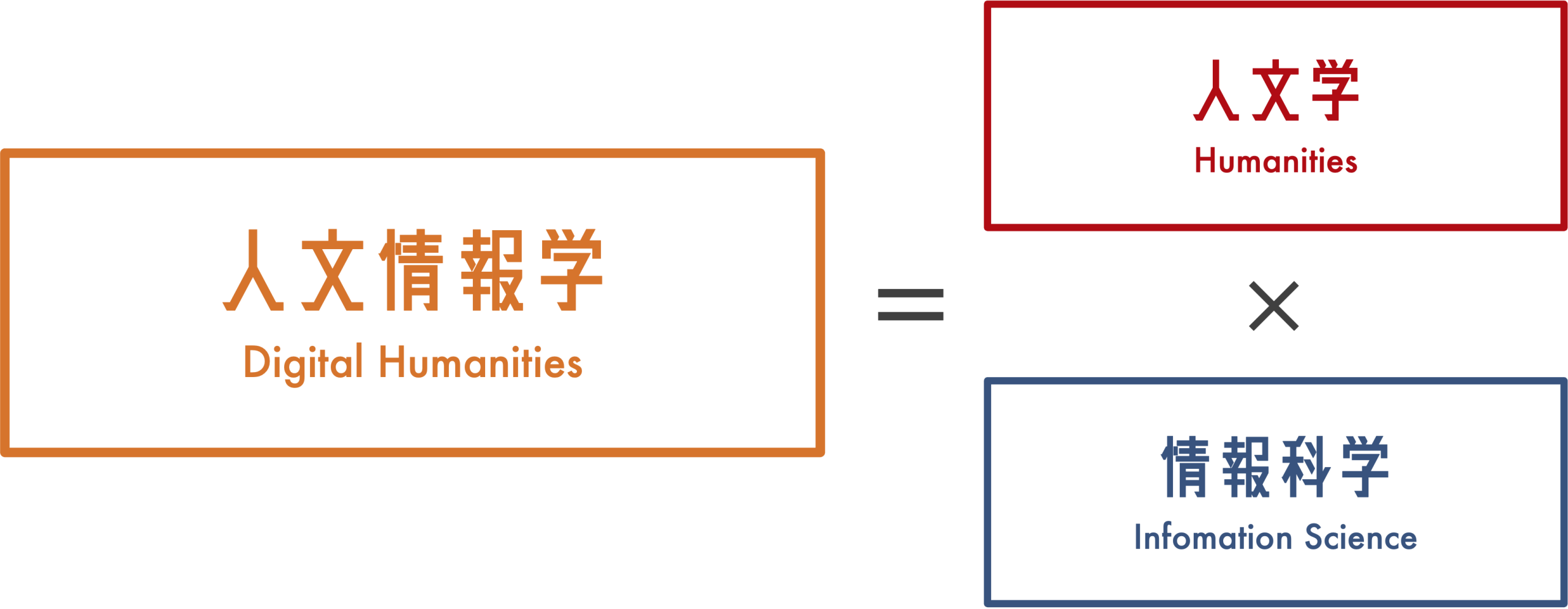
人文情報学とは、人文学と情報科学とを融合した学際的な研究分野です。
情報技術の急速な発展により、知のあり方が変わりつつあります。膨大なデジタルデータを前に、従来の人文学だけでは解明できない課題も増えてきています。それと同時に、情報技術によって私たちの生き方も大きく変化しました。
しかし、それにより私たちは本当に幸せになっているのでしょうか?
インターネット上では、なぜ意見の合わない人どうしが言い争い、ときには大きな暴力の応酬に発展してしまうのでしょうか?
そもそも、私たちの生活のなくてはならない一部になっているこの情報技術とは、一体何者なのでしょうか?
情報技術は、どのような仕組みで動き、私たちの社会でどのような役割を果たしているのか、果たすことになるのか、あるいは果たすべきなのか――。
膨大な情報の波に飲まれることなく、立ち止まってゆっくり考えるためには、人文学の知見が不可欠です。
このような問題意識を念頭に、人文情報学は、デジタル技術や情報科学の手法を用いて、人文学の研究対象を分析・解釈し、新たな知見を生み出します。それとともに、情報技術に対する人文学的な問い直しや情報技術による人文学の深化も目指しています。
Digital humanities is a transdisciplinary academic field integrating the humanities and information science.
The rapid development of information technology (IT) is changing the nature of knowledge. Vast amounts of digital data are revealing more issues that cannot be solved with conventional humanities alone. At the same time, IT has transformed our way of life.
But has it really made us happier?
Why do people who disagree clash and even engage in violent rows on the Internet?
To begin with, what is IT—this indispensable part of our lives? How does IT work, and what role does it, will it, should it play in our society?
Humanistic knowledge is essential to pause and take the time to think, without being swallowed by the huge waves of information.
Digital humanities takes this awareness of issues into account, and employing the methods of digital technologies and information science, analyzes and interprets humanities research subjects to create new knowledge. It also aims to re-examine IT through the lens of the humanities, and to enhance the humanities through the use of IT.
人文情報学に期待することExpectations for DH
日本の美術館や博物館などのミュージアムは、法的には博物館法を基盤として成り立っています。その博物館法が2022年に、制定以来70年ぶりに、大きく改正されました。時代は流れ、社会の変化の中でミュージアムに求められる役割、ミュージアムが社会において果たすべき役割も変わってきました。それをふまえ、改正博物館法では、デジタル技術を活用した博物館資料のデジタル・アーカイブ化やインターネットを通じたその公開をミュージアムの事業として定めています。デジタル化によって、インターネットを通じた情報提供に留まらず、広くミュージアム活動における教育や広報、交流活動、あるいは展示、鑑賞体験の提供を促進することが求められているといえます。
またコロナ・パンデミックによってデジタル化の重要性が広く認識されました。そのことは、社会的包摂の意識の高まりという背景もあり、ミュージアムを訪れるのが困難な人々、社会的身体的条件などによりミュージアムから遠ざけられている人たちをミュージアムがいかに取り込んでいくのか、ミュージアムがその資源と人々をどのようにつないでいくのか、という課題への取り組みでもあるのです。
つまり、従来、美術館や博物館は、美術史や歴史学、民俗学など、主に人文学的な知見、専門性を活動のベースにしてきましたが、現在、改正博物館法が示すように、それに加え、情報学的な専門知が必要とされているわけです。そして現在のミュージアムには、まさにこのような人文学と情報学の専門性を合わせ持った人材が乏しいのが現実です。大学教育において、そのような社会的ニーズへの対応が遅れていることの反映とも言えましょう。人文情報連係学府が目指すような、人文情報学の知見を持った人材が育つことは、ミュージアムの未来にとって、たいへん重要なことであると思います。
北九州市立美術館館長
後小路雅弘
Museums and art museums in Japan are established and operated on the legal basis of the Museum Act. This Museum Act underwent a major revision in 2022, 70 years since it was enacted. The passage of time brought about changes in the role museums are required to play amid changes in society, and indeed the social role of museums. Taking this into account, the amended Museum Act stipulates that museum services additionally include using digital technologies to create digital archives of museum materials and making them available to the public on the Internet. We may assume that on top of providing information via the Internet, through digitalization, museums are required to promote wider museum activities such as education, publicity, and exchange activities, and virtual exhibitions and visitor experiences.
The COVID-19 pandemic also boosted recognition of the importance of digitization. Against a backdrop of heightened awareness of social inclusion, digitization addresses the issues of how museums can be inclusive for people who have difficulty visiting museums and people who are excluded from museums due to social or physical conditions, and how museums can connect their resources with the public.
Where museum and art museum activities were conventionally based mainly on art history, historical science, folklore studies, and other fields of humanistic knowledge and specialization, today they require all of this plus specialized knowledge in informatics, as indicated by the amended Museum Act. And the truth is museums today lack such human resources specializing in both the humanities and informatics—perhaps a reflection of the delay in addressing such social needs on the part of university education. The development of human resources with knowledge in digital humanities, as envisioned by the Joint Graduate School of Digital Humanities, is key to the future of museums.
Kitakyushu Municipal Museum of Art Director
Masahiro Ushiroshoji
人文情報連係学府とはWho we are
人文情報連係学府は、文部科学省の「デジタルと掛けるダブルメジャー大学院教育構築事業 〜Xプログラム〜」の選定事業によって設置された大学院です。
本学府は、九州大学の各関係組織(人文科学府/統合新領域学府ライブラリーサイエンス専攻/数理・データサイエンス教育研究センター)の協働により成り立っています。これにより、本学府は、人文学の視点と、データ分析・人工知能等の情報科学を活用できる知見の、双方を備えた分野横断的な高度専門人材を育成することを目指します。人文学・情報科学の双方の専門科目を提供するほか、修士論文の指導チームのメンバーを人文科学府/ライブラリーサイエンス専攻/数理・データサイエンス教育研究センター所属の教員から学生が選択することができるなど、人文学・情報科学のダブルメジャーの教育体制を整えています。
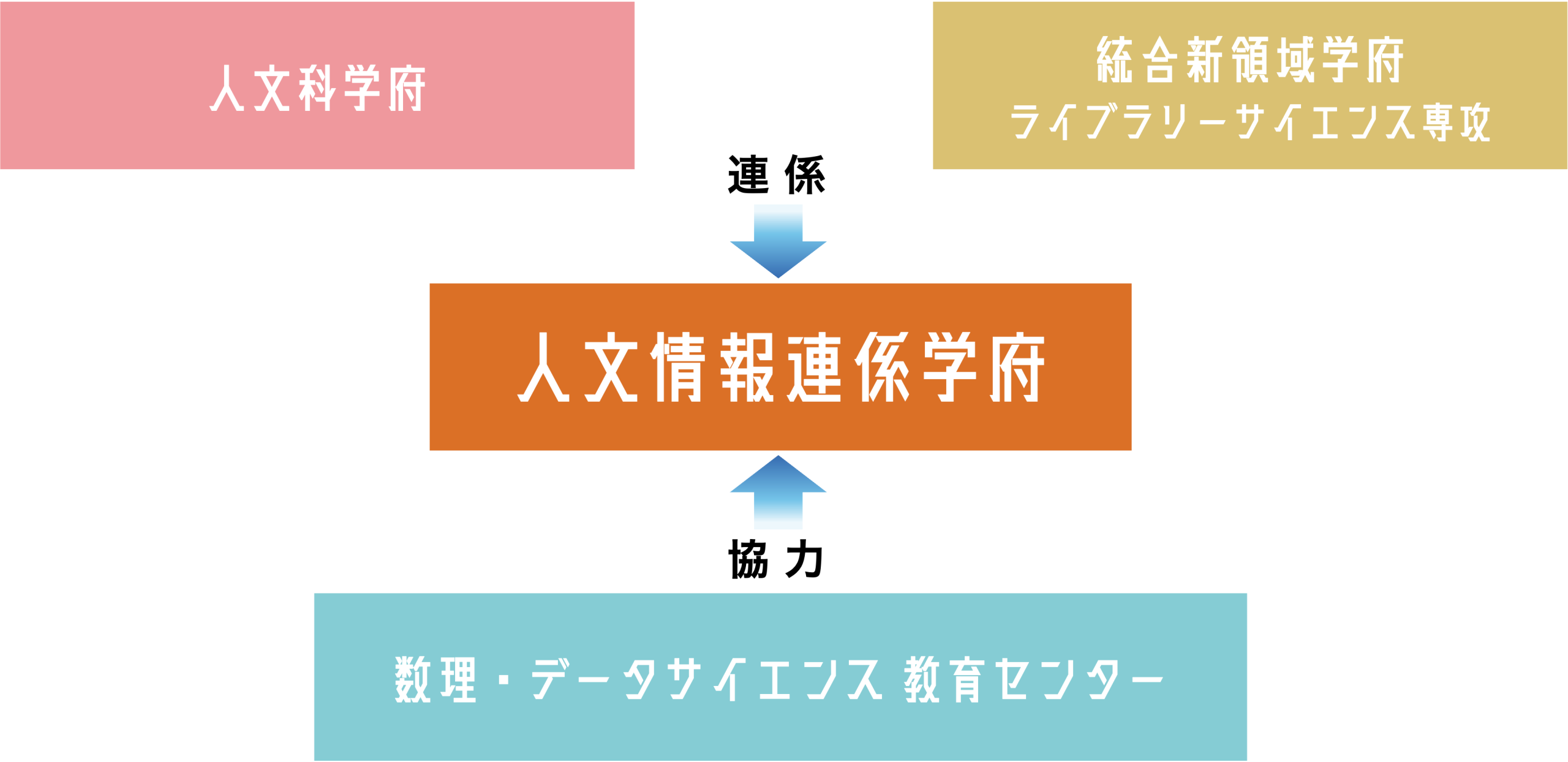
The Joint Graduate School of Digital Humanities was established to implement the “Digital Double Major Postgraduate Education Promotion Program: X Program” administered by the Ministry of Education, Culture, Sports, Science and Technology (MEXT).
Formed through the collaboration of Kyushu University’s Graduate School of Humanities and Graduate School of Integrated Frontier Sciences Department of Library Science, with cooperation from the Education and Research Center for Mathematical and Data Science, we aim to foster highly-skilled, specialized cross-sectoral human resources equipped with both the perspective of the humanities and the knowledge to use data analytics, artificial intelligence (AI), and other subfields of information science. We offer a double major education system comprising specialized courses in the humanities and information science, in which students may select their master’s thesis advisory team members from faculty members in the Graduate School of Humanities, the Department of Library Science, and the Education and Research Center for Mathematical and Data Science.
教員からのメッセージMessage from the Faculty
日本近代史を専攻し、歴史資料を使う側だった私は、現在は大学文書館で資料を提供する側になりました。この立場の変化は、資料と人をつなげることの重要性や面白さがあると、私に大きな気づきをもたらしました。私にとってこの「つなぐ」という行為は、たとえば、何かを考え実践する人に適切な資料を提供すること、専門の異なる人に資料を提供しこれまでにない解釈や利用方法・研究テーマやイノベーションが生まれるきっかけを作ること、デジタル技術の発展とともに大きく変わった資料の保存や提供方法を背景として資料と人をどのようにつなぐか、といったことです。私は学生の皆さんとこのようなことを一緒に実践し、研究していきたいと考えています。
准教授 赤司 友徳(大学史、アーカイブズ学、日本近現代史)
When I majored in modern Japanese history, I was on the user side of historical materials, and now in the Kyushu University Archives, I am on the provider side. This change in position was a huge eye-opener, as it taught me the importance and joy of matching materials with people. For me, matching means, for example, providing the appropriate materials to someone in the process of thinking about a project or putting it into practice; providing materials that are a contrast to someone’s specialized field and triggering the creation of a brand new interpretation, application, research topic, or innovation; and, against a backdrop of significantly changing methods of materials preservation and provision with the development of digital technologies, exploring new ways of matching materials with people. I hope to do all of this and conduct further research together with you.
Associate Prof. Tomonori Akashi (University history, archival studies, modern Japanese history)
私は19世紀イギリス詩の中でも特にAlfred Tennysonという詩人の作品に着目し、統計学や機械学習手法を援用した研究を行っていますが、根底には、「ことば」とそれを扱う人間、その認知に対する関心があります。詩に限った話ではないですが、人文学の研究対象は膨大な先行研究があり、また非常に奥深いものです。そのような研究対象にデジタルな、定量的研究手法を用いるのはまだまだchallengingな点もありますが、定量的研究と定性的研究の相互作用から得られる新しい知見、定量的・定性的研究それぞれの特性に関する示唆は、これからの人文学研究をより活発にするものと考えます。ここ人文情報連係学府で多くの方と活発に議論し、人文学研究をさらに発展させていけることを楽しみにしています。
講師 藤田 郁(計量文体論、人文情報学)
I am very interested in the poems of the nineteenth-century Victorian poet Alfred Tennyson and have been studying his works in the field of stylometry, which is the study of literary style using computational methodologies. I am also interested in languages, human beings and cognition. We utter, perceive and understand languages, but how? Why do cognitions often vary depending on the individual or even their emotional state? Poetry is one of the best resources with which to explore these questions. There is already a wealth of previous research in the humanities, and it is important not to overlook it. While the conventional humanities have a long and important history, employing a quantitative and computational approach in the humanities remains challenging. However, I strongly believe that the new perspective gained from combining quantitative and qualitative research will indeed spark the study of the humanities. I look forward to seeing you here at Joint Graduate School of Digital Humanities, discussing our research interests and contributing to the development of Digital Humanities and the Humanities.
Lecturer Iku Fujita (Stylometry, digital humanities)